
PETS DELIVERY EXPERT
Bringing your cat
to the USA.
Check the federal rules, the final U.S. destination and the transport arrangements together. Your cat’s preparation depends on the whole journey, including any onward flight.
- Published
- Sources checked
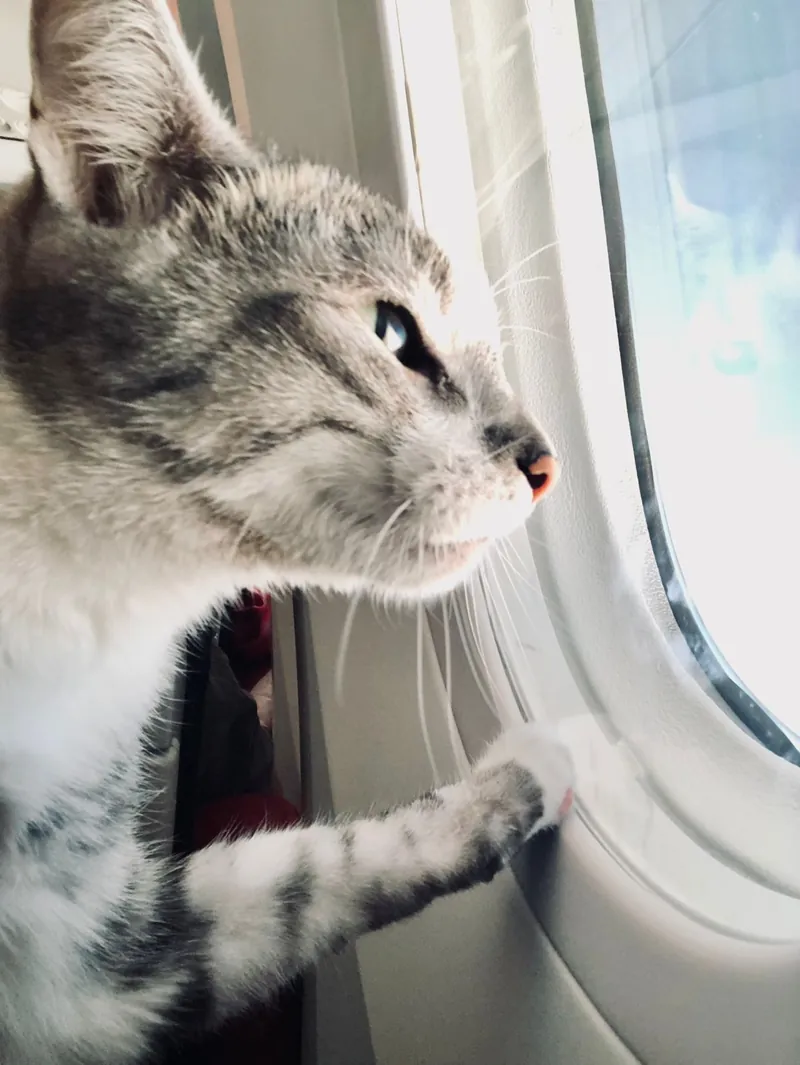
Photograph from our archive. Cabin arrangements depend on the cat, airline and itinerary.
Personal international moves with domestic cats. This guide explains the federal framework and destination checks, with signposts for Hawaii and Guam. Hybrids, research animals, sales and other ownership transfers need separate assessment.
1. Start with the federal cat requirements
CDC requires cats to appear healthy on arrival. Cats can be inspected at the port of entry; signs of a disease transmissible to people can lead to further veterinary examination at the owner’s expense or refusal of entry.
CDC does not require proof of rabies vaccination or a general health certificate for cats entering the United States. It recommends rabies vaccination, and destination or airline requirements can still apply.
Official sources: CDC: animal entry and cat requirements.
USDA APHIS Veterinary Services states that it has no animal-health import requirements for domestic pet cats. APHIS directs owners to the other responsible agencies and the destination state or territory.
Official sources: USDA APHIS: domestic cat imports.
2. Check the final state and whether you travel together
Write down the final city and state or territory, not only the airport where you enter the country. Ask the destination’s animal-health authority which vaccination records, certificate of veterinary inspection or other documents are required for your circumstances. Include any onward move between states.
Washington example: the state’s rule generally requires a certificate of veterinary inspection and current rabies vaccination. Cats younger than 90 days have a rabies-vaccination exemption. A separate certificate exemption covers qualifying family pets traveling with their owners, with current rabies certificates and no intended sale, trade or ownership change. A cat traveling separately needs its circumstances checked rather than assuming that exemption applies.
Official sources: Washington State: WAC 16-54-170 pet-entry requirements · Washington State Department of Health: pet imports and exports.
This is a state-specific example. Use the receiving authority’s current rules for your destination and check temporary animal-disease restrictions as part of the route assessment.
3. Plan Hawaii and Guam as separate destinations
Hawaii: use the official checklist for the origin, previous Hawaii residence and arrival airport. Pets meeting the relevant pre- and post-arrival conditions may qualify for direct release after inspection or the 5 Day Or Less program. Failure to qualify can mean quarantine for up to 120 days.
Direct arrivals at Kona, Kahului or Līhu‘e require a Neighbor Island Inspection Permit and arrangements with an approved inspecting veterinary facility. Hawaii’s current page also requires an inspection statement confirming freedom from evidence of New World screwworm infestation on certificates of veterinary inspection required for import. Ask the certifying veterinarian to use the current wording.
Check breed eligibility early: Hawaii separately restricts non-domestic cats and hybrids.
Official sources: Hawaii Department of Agriculture and Biosecurity: animal quarantine.
Guam: the Department of Agriculture publishes distinct pathways for U.S. arrivals, non-exempt foreign arrivals, exempt origins and transit. An entry permit is required even for pets connecting onward through Guam. Quarantine, tests and post-arrival examination arrangements depend on the applicable pathway and country history. Obtain the correct plan before booking.
Official sources: Guam Department of Agriculture: pet entry pathways.
The ordinary federal cat-entry rules do not replace these local procedures, including for travel from the U.S. mainland.
4. Confirm the airline and carrier requirements
Ask every operating carrier to confirm the accepted travel format, minimum age, carrier dimensions, weight limits and health-document window for your cat and itinerary. Cabin availability, accompanied hold and cargo are separate arrangements; acceptance on one flight does not confirm the next.
Discuss fitness to travel with your veterinarian. Choose the accepted carrier before departure and help your cat become familiar with it. Agree any care or medication instructions with the veterinarian and share the necessary handling information with the travel team.
Official sources: FDA: preparing pets for travel.
For an in-cabin journey, assess the space and ventilation the carrier provides when positioned under the seat, not only its external measurements. IATA publishes guidance but does not certify or approve commercial pet containers; the operating airline must accept the actual carrier and itinerary.
Industry source: IATA: guidance for dogs and cats in the cabin (PDF).
5. Build one travel file for the whole route
Ask the departure country’s veterinary authority about its export process, and check any transit-country conditions. Create a checklist for the documents actually required by the destination and airline.
- Identification and vaccination records, with matching pet details.
- Any required export or destination health certificate, issued within the applicable window.
- Permits, test results or quarantine arrangements where required.
- Confirmed airline acceptance and container details.
- The itinerary, departure contact, receiving contact and agreed handover point.
Keep the documents accessible for inspection. If the flight date changes, ask the veterinarian and travel team to recheck validity before reusing an existing certificate. An arrival airport and a final home in another state may require additional planning.
6. Include any later return in the plan
A cat returning to the United States is subject to the applicable entry rules again. If the journey will continue to another country, check that country’s preparation before you leave; some requirements need to be completed well in advance.
Official sources: CDC: animal entry and cat requirements.
For departure from the United States, use our USA pet-export planning guide. Families traveling with a dog as well should use the separate U.S. dog-entry guide.
Turn the requirements into a transport plan
For a managed move, see our international pet transport service to and from the USA or our cat transport service. Pets Delivery Expert coordinates the route, flights, travel-document preparation and agreed handovers.
Send the departure and final destination cities, the U.S. state or territory, dates, your cat’s breed, age and weight, and whether you will travel together. Mention existing records, any recent moves and any arrangements already made.
Request a cat transport route and quote
Prepare your journey details, then review and send your message in WhatsApp or your email app.
Questions before you book
Does my cat need a CDC Dog Import Form?
The CDC Dog Import Form is for dogs. For a cat, follow the cat-specific federal guidance plus the departure, transit, destination and airline requirements for the actual journey.
Can I travel without a rabies certificate or health certificate?
Check the whole route first. The absence of those general CDC cat requirements does not remove a state, territory, airline or departure-country requirement.
Can my cat fly after I have already moved?
Tell the travel team your dates and who will receive the cat. Separate travel can affect airline arrangements and eligibility for a destination-state document exemption, so the actual journey needs assessment.
Related reading: USA pet relocation service · International cat transport · Bringing a dog to the USA · Moving pets abroad from the USA · Pet transport without the owner · Pet shipping cost guide.
Read the official sources
- CDC: animal entry and cat requirements
- USDA APHIS: domestic cat imports
- Washington State: WAC 16-54-170 pet-entry requirements
- Washington State Department of Health: pet imports and exports
- Hawaii Department of Agriculture and Biosecurity: animal quarantine
- Guam Department of Agriculture: pet entry pathways
- FDA: preparing pets for travel
- CDC: bringing a dog into the United States
- IATA: guidance for dogs and cats in the cabin (PDF)
Confirm the current requirements for your pet, country history and travel date with the responsible authority before booking.
LET’S ARRANGE THE JOURNEY
Your companion.
Your next chapter.
Tell us where your pet is and where they need to go. We will organize the journey around them.
Start with the route
Share your departure and destination cities, your pet’s breed and weight, your preferred dates, and whether you will travel together. We will assess the route and prepare a transport proposal with the services included.
Request a route & quote