
PETS DELIVERY EXPERT
Flying with a pet
on Aeroméxico.
Check the exact service and flight together. Aeroméxico’s passenger and cargo rules differ, and some current official page versions need route-specific clarification.
- Published
- Sources checked
An independent Pets Delivery Expert planning guide for ordinary dogs and cats, with a separate section for genuine disability-trained service dogs. This is not airline support, airline endorsement or a booking confirmation. Government and operating-carrier requirements remain separate.
1. Match the booking to the way your pet travels
Aeroméxico distinguishes an ordinary under-seat pet (PETC), accompanied checked pet (AVIH), service dog (SVAN) and, where offered, emotional-support animal (ESAN). Air freight through Aeroméxico Cargo is another arrangement.
Identify every operating carrier. A flight marketed by Aeroméxico can involve another airline’s acceptance process. Ask for a pet confirmation covering each sector before committing to the itinerary.
Sources: Aeroméxico: pet travel, Mexico site (Spanish) · Aeroméxico Cargo: domestic live animals (Spanish).
2. Cabin weight is only the first check
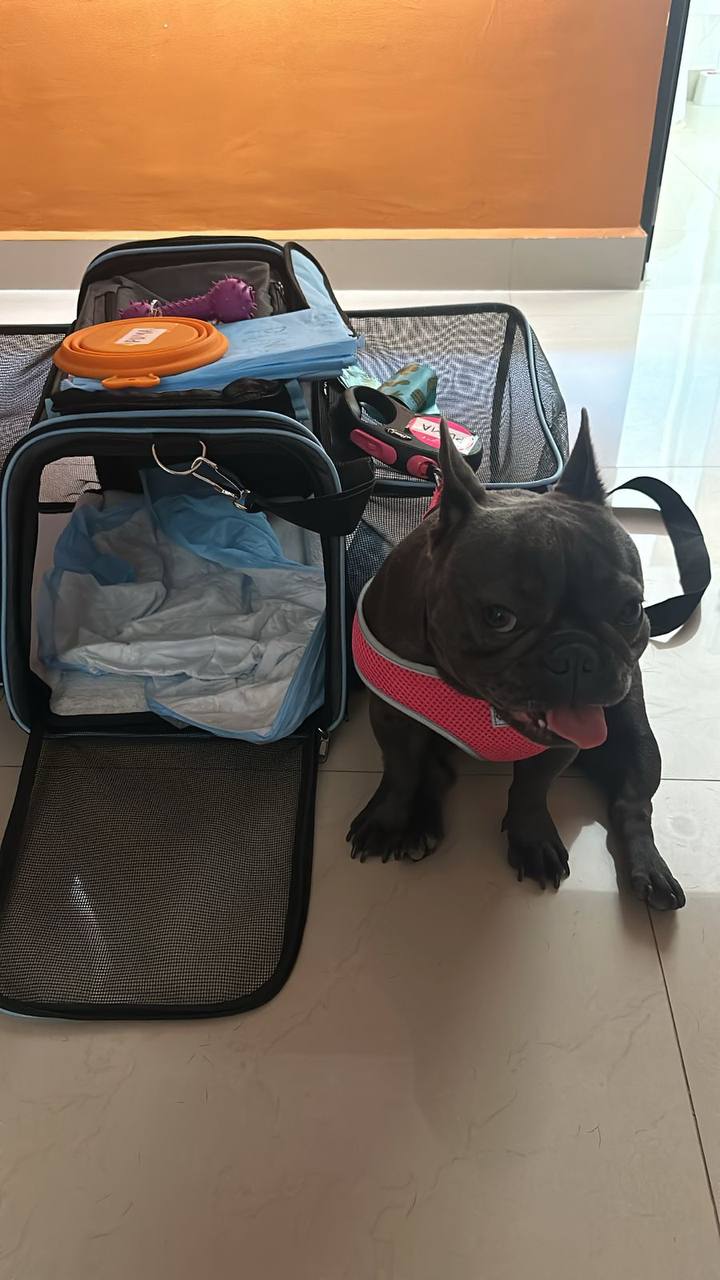
The published cabin allowance is 9 kg for the dog or cat and carrier together. The dedicated carrier section gives 40 × 30 × 22 cm in Tourist and 34 × 21 × 22 cm in Premier, measured length × width × height. Use a flexible, ventilated, leak-resistant carrier with absorbent lining and enough room for natural movement.
Confirm the dimensions: another table on the English page still shows 40 × 30 × 20 cm. Premier availability also varies by aircraft. Neither a weight below 9 kg nor a carrier sold as approved establishes acceptance.
The pet stays in its carrier beneath the seat. One ordinary cabin pet is allowed per passenger. Check the eligible seat and whether selecting it costs extra. Our carrier guide helps you prepare the measurements.
Sources: Aeroméxico: pets in the cabin · Aeroméxico: pet travel, Mexico site (Spanish).
3. Checked-pet transport has a separate crate check
For accompanied hold travel, the published ceiling is 45 kg including the crate. The animal travels on the passenger’s flight. Send the airline the exact crate dimensions: acceptance depends on aircraft and available space, not weight alone.
The crate must be rigid, secure, ventilated, leak-resistant and large enough for the pet to turn and lie naturally. Follow the complete current door, fastening, floor and labeling requirements. The airline inspects the container and can refuse an unsuitable one.
Request hold service at least 72 hours ahead for departures from Paris or Amsterdam. Check-in guidance is two hours before domestic flights and three before international flights.
Sources: Aeroméxico: checking your pet · Aeroméxico: pet travel, Mexico site (Spanish).
4. Plan the connection as another check-in
The checked-pet page instructs travelers to collect and recheck their pet at a connection, including Aeroméxico connections. Allow time for release, any authority inspection, transfer between facilities and the next check-in. Do not assume a tag to the final destination removes this step.
Mexico-to-London ordinary pets must use Aeroméxico Cargo; the reverse direction may offer passenger-pet services subject to acceptance. Service dogs follow their separate approval process.
The Mexico hub’s June 2026 terms require at least two hours between flights for AVIH connections and exclude AVIH itineraries with technical stops where the passenger does not leave the aircraft. Confirm the full itinerary, not just its overall duration.
Before booking a short connection, ask where the animal is collected, who clears it and which counter or cargo facility accepts it next. Write those handover points beside the flight times.
Sources: Aeroméxico: checking your pet · Aeroméxico: pet travel, Mexico site (Spanish).
Age and health: passenger rules are not cargo rules
The passenger pages give an eight-week baseline for dogs and cats, with stricter destination rules possible. Dogs entering the U.S. must be at least six months old under CDC rules. Do not transfer the passenger minimum to Aeroméxico Cargo.
Unweaned animals and females with nursing young are not accepted for cabin travel. Aeroméxico also excludes pets receiving veterinary treatment in its cabin acceptance text. Tell the airline about treatment and discuss fitness with your veterinarian; do not stop prescribed care to satisfy a booking rule.
Sources: Aeroméxico: pets in the cabin · CDC: bringing a dog into the U.S..
Sedated dogs and cats are not accepted for Aeroméxico checked-baggage or Cargo transport. Ask your veterinarian about fitness and appropriate care; do not stop prescribed treatment or substitute a medicine to get around this restriction.
Sources: Aeroméxico: passenger-pet terms · Aeroméxico Cargo: live animals.
5. Short-nosed pets need an explicit breed review
Aeroméxico excludes brachycephalic dogs and cats from checked-baggage transport. Its list includes breeds beyond the familiar Bulldog and Pug, so use the full official list. Some suitable small pets may qualify for the cabin; size, carrier and route conditions still apply.
The current page specifically says corrective BOAS surgery does not make a brachycephalic dog eligible for checked baggage or cargo. Do not treat surgery, a waiver or a generic veterinary certificate as a workaround.
These are ordinary-pet transport rules. For a genuine service dog on a U.S.-covered flight, safety and behavior decisions require an individual assessment independent of breed. Government restrictions remain separate.
Sources: Aeroméxico: checking your pet · 14 CFR 382.79: individual assessment.
6. Resolve the weather rule for your departure
The English checked-pet page gives a lower temperature boundary of 7°C; the current Mexico hub and its June 2026 terms use 2°C. Both give 35°C as the upper reference. We have not treated these as interchangeable.
Ask Aeroméxico which rule applies to every airport on your booking. A waiver is not a guarantee of acceptance or evidence that transport is medically safe. Plan a practical alternative date and speak with your veterinarian about fitness to fly.
Sources: Aeroméxico: checking your pet · Aeroméxico: pet travel, Mexico site (Spanish).
7. Cargo is not an automatic fallback
Aeroméxico Cargo has its own live-animal, station, temperature and crate checks. Its domestic live-animal page excludes dogs and cats under four months, while its general restrictions page says under twelve weeks. Confirm the age rule directly rather than using either as clearance for a young animal.
The cargo pages also contain different breed lists. Give the animal’s precise breed or mix and ask for shipment-specific acceptance. A larger crate does not cancel a listed restriction.
Request a written quote and handover instructions from the cargo service for the proposed route. The domestic live-animal page is not evidence that the same arrangement is available on an international sector.
Sources: Aeroméxico Cargo: domestic live animals (Spanish) · Aeroméxico Cargo: restrictions (Spanish).
8. Build the document timetable around the route
Aeroméxico’s passenger pages call for health, vaccination and applicable transport paperwork; document windows depend on the journey. Confirm which original and copy are needed, who may issue them, and whether a fresh certificate is required for the return.
Some airline sections still mention the former 2021 U.S. dog suspension and outdated wording about the July 2025 export-certificate transition. Do not rely on those passages for current U.S. import instructions. Certain earlier certificates can still qualify under CDC’s current U.S.-vaccinated, high-risk-country pathway. Check the applicable CDC requirements and separately obtain the airline’s acceptance.
For dogs traveling to the U.S., the airline’s current overview requires an early document and physical check and restricts foreign-vaccinated dogs coming from high-rabies-risk countries. A Mexico connection does not erase previous travel. Tell the airline the complete six-month history.
Sources: Aeroméxico: pets in the cabin · Aeroméxico: flying with pets and U.S. notices · CDC: bringing a dog into the U.S..
9. Keep the two screwworm directions separate
U.S. to Mexico: APHIS’s pathway for dogs originating in and proceeding from the United States requires an NWS inspection certificate signed by a USDA-accredited veterinarian and issued within five days before entry. This took effect on August 3, 2026; APHIS endorsement is not required. Confirm a different origin or return-to-Mexico case rather than assuming the same pathway. Cats are not included in this dog-certificate rule.
Mexico to the U.S.: APHIS requires the applicable screwworm-freedom certification for dogs from affected countries. For Mexico, an authorized clinical veterinarian may issue it on behalf of the government veterinarian. Use the current APHIS instructions and authorized-veterinarian directory, as well as CDC requirements.
Sources: USDA APHIS: pet travel from the U.S. to Mexico · USDA APHIS: bringing a pet dog into the U.S..
10. Price every segment and required seat
Aeroméxico calculates passenger-pet charges across its operated flight segments. Route, service and season can affect the price; another operating airline has its own charges. Use the current pet-fee display or booking quote, then check the total before paying.
Include any required seat-selection charge, cargo handling, veterinary work and destination clearance in the budget. Check pet-service change and refund conditions alongside the passenger fare. This guide does not publish an undated flat fare or a universal refund promise.
Service dogs: training and route-specific rights
Aeroméxico offers its service-dog category without an animal-transport charge. The dog must be trained for disability-related assistance, controlled and safely accommodated on the floor; there is no published fixed weight ceiling, but physical fit still matters. It cannot occupy a passenger seat.
Ask Aeroméxico’s accessibility team which forms and submission channel apply to every flight. The reviewed passenger pages do not establish one clear, universal service-dog advance-document deadline. Do not borrow the emotional-support application window and label it a service-dog rule.
On U.S.-covered flights, DOT recognizes task-trained psychiatric service dogs as service dogs; emotional support alone does not qualify. Airlines may require the DOT transport form and, for a flight scheduled for eight hours or more, a relief attestation. Government entry documents still apply.
Aeroméxico also describes a distinct ESAN category on permitted routes. Its availability is not a way to turn an ordinary pet into a service dog. A certificate, registry entry or vest alone does not establish disability-task training. Where the airline’s general wording and U.S. rules differ, obtain a route-specific answer from its accessibility team.
Sources: Aeroméxico: service and emotional-support animals · U.S. DOT: service animals · 14 CFR 382.75: service-dog documentation · Aeroméxico: pet travel, Mexico site (Spanish).
Prepare your route review
Send the departure, destination, travel date, connections and operating flights, together with your pet’s breed, age, weight and measurements. Include the carrier’s external dimensions, loaded weight and any airline response already received.
We can use that information to review the transport format and the preparation still needed. Request a route and quote, or read about dog transport, cat transport and travel without the owner. Airline acceptance remains the airline’s decision.
Questions before you book
Why does this guide ask me to confirm carrier dimensions?
Aeroméxico’s official English page contains different dimension references. Ask the airline to confirm the carrier for the booked aircraft and cabin before buying it.
Read more: Aeroméxico: pets in the cabin
Does a larger crate remove a breed restriction?
No. Container fit and animal eligibility are separate checks. Use the complete published breed restrictions and request a decision for the actual pet.
Read more: Aeroméxico: checking your pet · Aeroméxico Cargo: restrictions (Spanish)
Can I assume the return journey uses the same documents?
No. Entry direction, the animal’s origin and recent travel, certificate validity and the operating airline all need a separate return-trip check.
Read more: Aeroméxico: flying with pets and U.S. notices · USDA APHIS: pet travel from the U.S. to Mexico · USDA APHIS: bringing a pet dog into the U.S.
Related reading: Airline pet travel guides · Carrier fit and preparation · U.S. dog-entry planning · Pet shipping cost guide.
Official sources and scope
- Aeroméxico: pet travel, Mexico site (Spanish)
- Aeroméxico: flying with pets and U.S. notices
- Aeroméxico: pets in the cabin
- Aeroméxico: checking your pet
- Aeroméxico: service and emotional-support animals
- Aeroméxico Cargo: domestic live animals (Spanish)
- Aeroméxico Cargo: restrictions (Spanish)
- U.S. DOT: service animals
- 14 CFR 382.75: service-dog documentation
- 14 CFR 382.79: individual assessment
- CDC: bringing a dog into the U.S.
- USDA APHIS: pet travel from the U.S. to Mexico
- USDA APHIS: bringing a pet dog into the U.S.
- CDC: U.S.-vaccinated dogs returning from high-risk countries
Official sources checked October 11, 2026. Rules and availability can change. Obtain confirmation for the animal, container, operating flights and travel date before making non-refundable arrangements. Unresolved carrier-dimension, weather and cargo-age differences are identified above. The Mexico hub and English passenger pages were checked through their publicly served published content; older dated passages have not been substituted for current government rules.
LET’S ARRANGE THE JOURNEY
Your companion.
Your next chapter.
Tell us where your pet is and where they need to go. We will organize the journey around them.
Start with the route
Share your departure and destination cities, your pet’s breed and weight, your preferred dates, and whether you will travel together. We will assess the route and prepare a transport proposal with the services included.
Request a route & quote