
PETS DELIVERY EXPERT
Flying with a pet
on Air Canada.
Confirm the animal, container, operating airline and every flight before committing to a journey.
- Published
- Sources checked
Independent planning guidance for dogs and cats on Air Canada, with separate cargo and genuine disability-trained assistance-dog sections. This is not airline support, an affiliation claim or a booking confirmation.
1. Match the carrier to the aircraft
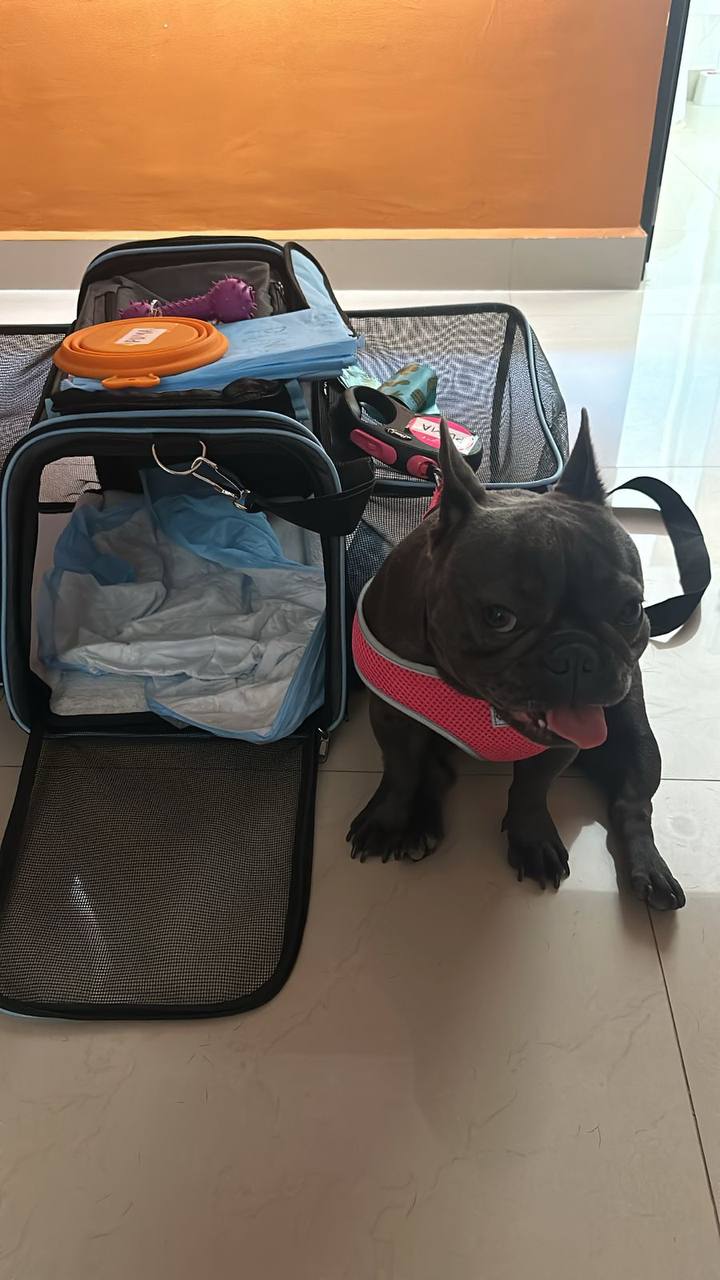
Cats and small dogs need a flexible soft carrier; hard-window backpacks are excluded. Standard mainline dimensions are 40 × 43 × 20 cm (width × length × height); listed regional aircraft allow 40 × 55 × 27 cm. Specified widebody Business seats use 21 × 41 × 28 cm. Premium Economy excludes cabin pets. Verify your aircraft.
Usually pets must be fully weaned and at least 10 weeks. One cabin pet per passenger; the animal must fit naturally inside.
Sources: Air Canada: travelling with your pet.
2. Register the pet separately
Make advance arrangements; a passenger ticket alone does not reserve the animal. The international tariff says registration within 24 hours of booking protects against change or cancellation fees if the animal cannot be accommodated. Provide breed, loaded dimensions and weight, then retain the pet confirmation.
For international carriage, Rule 55 lists base one-way cabin fees of $50 between Canada and the U.S. excluding Hawaii, and $100 otherwise; hold fees are $105 and $270 respectively. Obtain the currency, applicable taxes and final amount for your itinerary.
3. Check hold limits and seasonal exclusions
Accompanied hold limits are 45 kg combined and 292 cm summed dimensions, using a secure hard crate. Snub-nosed dogs are excluded; listed strong breeds require reinforced crates. Heat, cold, aircraft and route embargoes apply, including a December 18–January 4 peak-period restriction. Check the full dated table.
Sources: Air Canada: travelling with your pet.
For international accompanied-hold travel, Rule 55(C)(19) also says Air Canada will not accept a dog or cat aged six months or older weighing under 3 kg. Confirm this animal-weight restriction before using the hold.
4. Resolve operating-carrier and source differences
The passenger policy covers Air Canada, Rouge and Express operated by Jazz, excluding partner-operated codeshares. It contains conflicting carry-on and shared-kennel wording. Obtain written clarification before relying on either allowance. The live pet page asks you to arrive 30 minutes before the normal recommended check-in time; the international tariff says animal check-in is between three and two hours before departure. Have Air Canada confirm the applicable time for your itinerary.
Sources: Air Canada: travelling with your pet.
Also check Air Canada’s international tariff, Rule 55(A)(10).
5. Treat AC Animals as a separate shipment
Request a cargo assessment for unaccompanied, oversize or otherwise unsuitable passenger-baggage journeys. The dedicated product page did not return readable detail during this review, so no cargo booking window or universal acceptance is promised.
A current Cargo news notice describes restricted acceptance of pugs, bulldogs and Pekingese through an IPATA-listed company, with BOAS assessment documents. That cargo notice does not overturn the passenger-hold breed exclusion. Ask the cargo team to confirm the actual breed, route, date and veterinary paperwork.
Cargo charges depend on routing and actual or dimensional loaded weight; terminal, screening and comfort-stop costs can be additional. Ask for a line-item quotation and the delivery/collection timetable.
Sources: Air Canada Cargo: AC Animals · Air Canada Cargo: news and embargo updates (official indexed detail) · Air Canada Cargo: charges and fees (official indexed detail).
6. Disability-trained service dogs
Use Accessibility Services rather than the ordinary-pet booking process. Air Canada’s indexed service-dog detail requests forms at least 48 hours before departure, while saying it makes reasonable efforts for later requests. For U.S. travel it identifies the DOT transport form and, for flights of eight hours or longer, the relief form. For other routes, use the Air Canada form and training documentation identifying the handler and disability-related task.
The downloadable form covers Canada, international and Caribbean journeys and requests evidence from a person or organisation specialising in service-dog training. Carry the completed paperwork. Have Accessibility Services confirm seating, floor space and the applicable U.S./non-U.S. procedure. The live service-page link currently opens a general accessibility overview; the form and indexed requirements are therefore disclosed separately. Do not assume an emotional-support animal qualifies as a trained service dog.
Sources: Air Canada: service-dog requirements (indexed detail; live page returns accessibility overview) · Air Canada: service-dog form (PDF) · Air Canada: international tariff, Rule 55(E).
7. Check government entry separately
For U.S.-bound dogs, review the CDC pathway for the dog’s recent country history and vaccination status. Airline confirmation is not an import clearance. Build the veterinary schedule before choosing a departure date, and make sure the return journey is covered too.
Sources: CDC: bringing a dog into the U.S..
Prepare a route review
Send your departure and arrival cities, dates and operating flights, plus your pet’s breed, age, weight and measurements. Include the carrier’s external dimensions and loaded weight, who will accompany the animal, and any existing airline confirmation.
Keep separate checklists for airline acceptance, veterinary preparation, government entry and transit rules, and arrival handover. Ask who receives the animal if a flight changes or an inspection takes longer than expected.
Questions before you book
Does my ticket reserve a place for my pet?
No. Register the animal separately and keep its confirmation.
Read more: Air Canada: current international tariff, Rule 55
Can a snub-nosed dog use cargo if passenger hold travel is refused?
Only after a separate cargo assessment. Some breeds have conditional requirements; a passenger-hold refusal is not cargo approval.
Read more: Air Canada Cargo: news and embargo updates (official indexed detail)
What should I send for a route review?
Send the flights and dates, animal measurements and breed, loaded carrier dimensions, and existing confirmation.
Related reading: Airline pet travel guides · Carrier preparation · Pet shipping costs.
Official sources and scope
- Air Canada: travelling with your pet
- Air Canada: current international tariff, Rule 55
- Air Canada: service-dog requirements (indexed detail; live page returns accessibility overview)
- Air Canada: service-dog form (PDF)
- Air Canada Cargo: AC Animals
- Air Canada Cargo: news and embargo updates (official indexed detail)
- Air Canada Cargo: charges and fees (official indexed detail)
- CDC: bringing a dog into the U.S.
Official sources checked 11 October 2026. Availability, documents, charges and acceptance require confirmation for the actual journey. Passenger-page conflicts over carry-on allowances and kennel sharing are preserved. Cargo product detail and the live service-dog detail were not fully readable; indexed service text and the official form were used with that limitation disclosed.
LET’S ARRANGE THE JOURNEY
Your companion.
Your next chapter.
Tell us where your pet is and where they need to go. We will organize the journey around them.
Start with the route
Share your departure and destination cities, your pet’s breed and weight, your preferred dates, and whether you will travel together. We will assess the route and prepare a transport proposal with the services included.
Request a route & quote